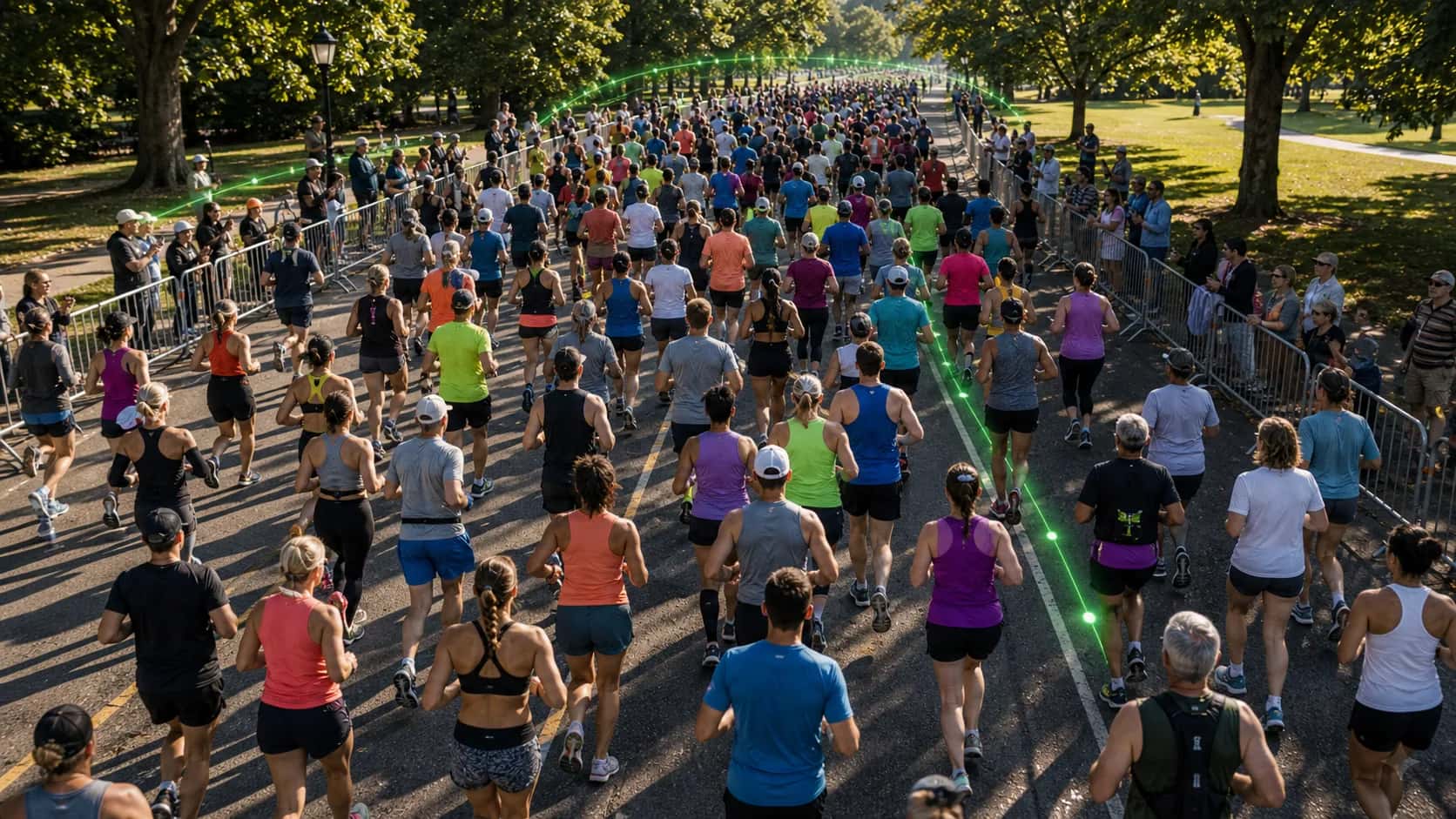
A 5K pace chart turns a goal finish time into a practical pace target for each mile or kilometer. This pace guide explains how to interpret the number, when it is useful, what can make it misleading, and how to turn it into a practical next step for training or race planning. The examples are written for everyday runners, so the goal is not a perfect lab result; it is a clear estimate you can use with the right amount of caution.
How 5K Pace Works
A 5K is 3.11 miles or 5 kilometers, so small pace changes can move the finish time by meaningful amounts.
Knowing both mile and kilometer pace helps when races mark one unit but your watch or plan uses another.
Choosing a Goal
Use a recent race or time trial rather than a best-case wish pace.
If you fade badly in the final kilometer, the opening pace was probably too ambitious.
Using Splits
Even splits are a useful baseline for a 5K, but a controlled first kilometer can prevent early overpacing.
Use the split calculator to turn your goal time into exact checkpoints.
How to Use Pace in Practice
5K Pace Chart is useful because pace turns a goal into something you can check during a run. Instead of thinking only about a finish time, you can break the effort into mile, kilometer, or lap targets. That makes pacing easier to adjust when the course, weather, or terrain changes.
Pace should still be paired with effort. A pace that feels controlled on a cool flat road can feel too hard on hills or in heat. Use the chart or calculator to set the target, then use breathing, heart rate, and recent training to decide whether that target is realistic on the day.
Example Pace Scenario
Imagine a runner using 5k pace chart to choose a goal for a 10K. A target pace might look manageable on paper, but the first mile can feel deceptively easy because adrenaline is high. Breaking the goal into splits helps the runner avoid starting too fast and gives a simple checkpoint for adjusting before fatigue accumulates.
For workouts, the same idea applies at a smaller scale. Tempo runs, threshold intervals, easy runs, and long runs all use pace differently. A reference chart helps translate the plan into the units your watch, treadmill, or race course uses, especially when switching between min/mile and min/km.
Miles, Kilometers, and Rounding
Pace conversions can look simple, but rounding can create small errors over a full race. A few seconds per kilometer or mile may not matter for an easy run, but it can add up for a half marathon or marathon goal. Use exact calculator output when a specific finish time matters.
Be especially careful when a training plan uses one unit system and your watch uses another. Converting 8:00 per mile into min/km, or 5:00 per kilometer into min/mile, should be done once with a reliable calculator rather than estimated repeatedly in your head.
Common Pacing Mistakes
The biggest pacing mistake is confusing current pace, lap pace, average pace, and target pace. Watches smooth GPS data differently, so current pace can jump around. For most workouts and races, lap pace or average pace over a known split is more useful than reacting to every instant change.
Another mistake is treating pace as the only signal. Hills, wind, surface, crowding, and heat can all make the same pace cost more. If effort rises too early, adjust before the run turns into a survival effort. Good pacing is controlled enough to leave options later.
How to Turn Pace Into Splits
Once 5K Pace Chart gives you a target, turn it into checkpoints. For races, mile or kilometer splits make it clear whether you are on track. For workouts, lap splits help you keep hard intervals honest and easy recoveries easy.
A split plan should include a small amount of flexibility. On a hilly course, even effort may be better than even pace. On a flat course, even splits are easier to execute. If your goal is aggressive, plan the first third conservatively enough that you can still respond later.
When to Use the Pace Calculator
Use the pace calculator when 5k pace chart does not match a standard chart value or when you need a custom distance. The calculator can convert finish time to pace, pace to finish time, and speed to pace without requiring manual unit math.
For race planning, combine pace with a split calculator. For treadmill running, convert pace to speed before the workout. For mixed-unit plans, save both min/mile and min/km so you are not converting under fatigue during a session.
Quick Takeaways
Best use
5K Pace Chart is most useful for planning and comparison, especially when you use the same method consistently from run to run.
Main limit
Performance estimates can shift with terrain, weather, fatigue, and measurement quality.
Next step
Use the related calculator to turn the guide into a custom number for your own distance, time, pace, or training target.
How to Apply the Pace
Use 5K Pace Chart to turn a target into checkpoints you can actually follow.
| Use case | What to calculate | What to watch |
|---|---|---|
| Race goal | Average pace and split targets | Avoid starting faster than the plan. |
| Workout | Rep pace and recovery duration | Keep the effort matched to the workout purpose. |
| Treadmill | Speed setting and incline | Check whether the machine uses mph or km/h. |
FAQ
Is 5k pace chart exact?
No. 5K Pace Chart should be treated as a practical estimate. It is useful for planning, comparison, and learning the pattern, but real-world conditions and individual differences can change the result.
How often should I recalculate it?
Recalculate when your fitness, goal, route, body weight, recent race result, or training conditions change. For routine training, trends over several weeks are more useful than changing targets every day.
Should I use miles or kilometers?
Use the unit system your watch, training plan, treadmill, or race course uses. If you switch units, use a calculator once and save the converted target so you are not estimating during a workout.
What should I pair with 5k pace chart?
Pair it with pace, heart rate, and workout purpose. The estimate is strongest when it agrees with other training signals.
Use the Related Tools
Related calculators
Running Pace Calculator
Calculate running pace, speed, minutes per mile, and minutes per kilometer from distance and finish time.
Use this toolRunning Split Calculator
Calculate even running splits for races and workouts from distance, target time, and split interval.
Use this toolRace Time Predictor
Predict race finish times and target pace from a recent race result using a Riegel-style endurance formula.
Use this tool