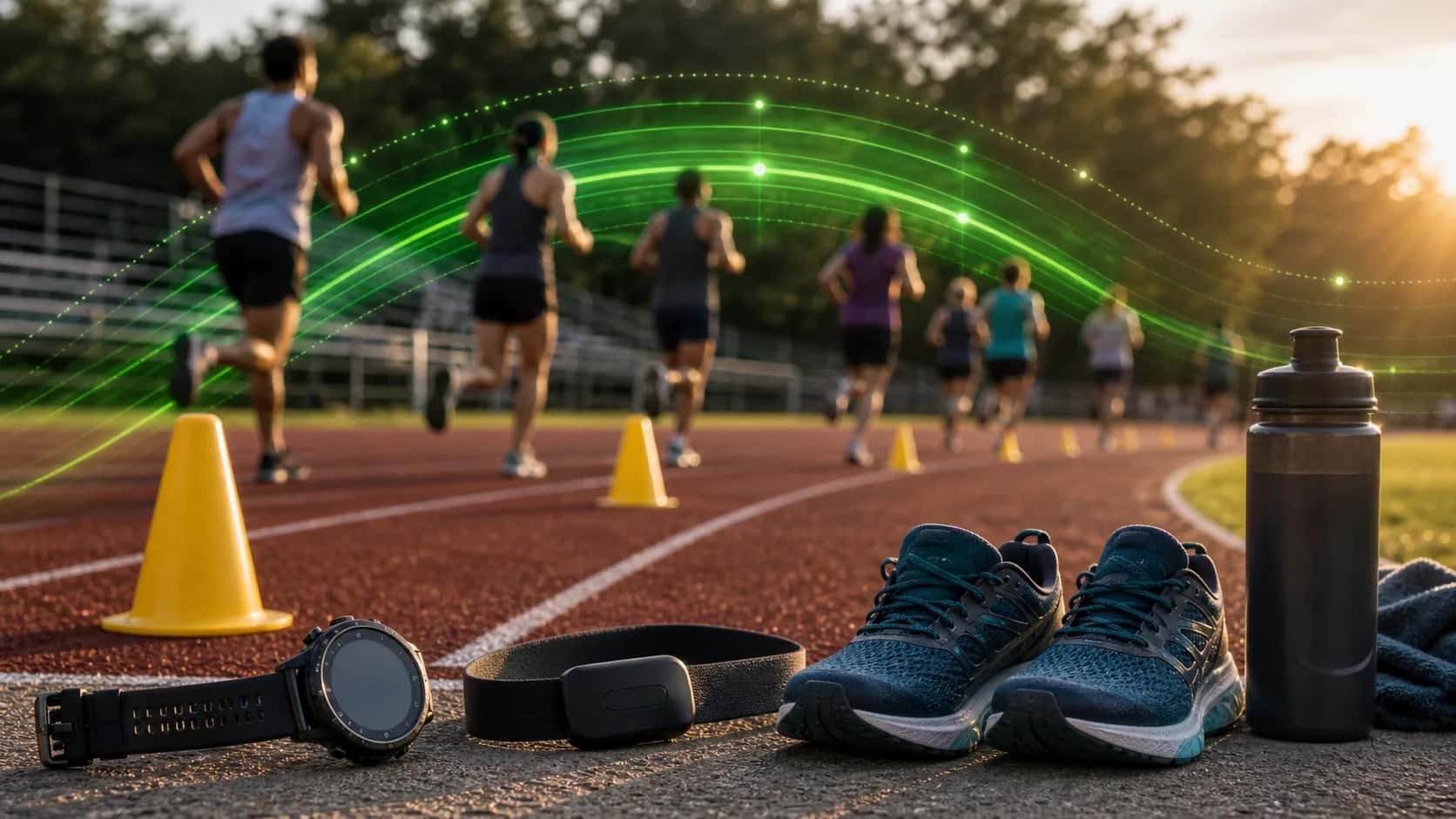
VO2 max for runners describes aerobic capacity, but race performance also depends on economy, threshold, durability, pacing, and training specificity. Use the estimate to understand broad aerobic fitness trends, not as a complete ranking of running ability or a replacement for lab testing.
What Is VO2 Max for Runners?
VO2 max describes the maximum rate of oxygen use during intense exercise, usually reported as ml/kg/min.
For runners, VO2 max running estimates can help track aerobic fitness, but they do not explain every difference in race performance.
VO2 Max Running Estimates vs Lab Tests
The Cooper 12-minute test estimates VO2 max from distance covered, making it practical for runners who want a repeatable field test.
A lab test measures oxygen consumption more directly and can provide threshold data, but it is less accessible and still does not replace training context.
VO2 Max and Running Performance
VO2 max and running performance are connected, but runners with similar VO2 max values can race differently because of economy, pacing, durability, and threshold.
Use VO2 max alongside pace, heart rate, race results, and repeatable workouts for a more useful picture of fitness.
What VO2 Max Means for Runners
VO2 max helps explain aerobic capacity, but it is only one part of running performance. Two runners with similar VO2 max estimates can race very differently because running economy, threshold, endurance, pacing, and durability all matter.
For most runners, the best use is tracking broad fitness changes over time. A field estimate can show whether aerobic fitness is moving in the right direction, but it should not replace race results, workout consistency, or how sustainable training feels.
Field Estimates vs Lab Testing
Lab VO2 max testing directly measures oxygen consumption with specialized equipment. Field estimates use performance, distance, or time to approximate the value. That makes them easier to repeat, but also more sensitive to pacing, motivation, weather, surface, and measurement accuracy.
When using a field estimate, repeat the same method under similar conditions. Comparing a track test on a cool day with a windy road test months later can make the number look more precise than it is. Consistency matters more than chasing a single impressive estimate.
Example Runner Scenario
A runner may improve a 12-minute test distance after several weeks of consistent training. That can raise the estimated VO2 max, but the more important message is that the runner can cover more ground at a hard aerobic effort. The estimate gives context to that improvement.
If the number seems surprising, check the input first. Was the distance measured accurately? Was the test paced evenly? Was the runner rested enough to give a strong effort? These details can change the estimate more than small formula differences.
What Can Improve the Number
Consistent aerobic volume, threshold work, hills, strides, intervals, and enough recovery can all support VO2 max development. The right mix depends on the runner's training age and injury history. More intensity is not automatically better if it prevents consistency.
A practical approach is to keep easy runs easy, add one or two purposeful quality sessions when appropriate, and repeat a field test only occasionally. Improvements often show up first as faster pace at the same effort, better workout completion, or stronger race finishes.
Common VO2 Max Mistakes
The biggest mistake is treating VO2 max as a complete ranking of running ability. It is possible to improve race performance without a dramatic change in estimated VO2 max because economy, threshold, pacing, and endurance can improve too.
Another mistake is comparing values from different devices or formulas. A watch estimate, Cooper test estimate, and lab result may not match. Pick one method for tracking trends, and use other information to understand the bigger training picture.
How to Use This With Other Tools
Use VO2 max alongside pace, race prediction, and heart-rate tools. VO2 max can describe aerobic capacity, while pace and race calculators translate current fitness into training and racing decisions.
If the estimate is being used to plan training, avoid making large changes from one result. Look for repeated evidence: similar tests, recent race results, workout paces, and recovery quality. The best decisions come from a pattern, not a single number.
What VO2 Max Does and Does Not Explain
Use VO2 max as one signal inside a broader running profile.
| Signal | What it helps explain | What it misses |
|---|---|---|
| VO2 max | Broad aerobic capacity during intense exercise. | Economy, threshold, pacing, durability, and race execution. |
| Cooper test estimate | A repeatable field-test trend for runners. | Lab precision and conditions outside the test day. |
| Race result | Performance under real course and pacing demands. | Whether the result came from aerobic power or other strengths. |
| Heart rate and pace | How fitness shows up in regular training. | Sensor noise, heat, fatigue, and route variation. |
VO2 Max for Runners FAQ
What is VO2 max for runners?
VO2 max is a measure of maximal oxygen use during intense exercise. For runners, it is one aerobic fitness signal, not a complete prediction of race performance.
Does VO2 max running predict race times?
It can help explain aerobic potential, but race times also depend on threshold, running economy, endurance, terrain, pacing, and preparation for the distance.
How should runners track VO2 max?
Use the same calculator or field test under similar conditions, then compare the trend with workouts, heart rate, and race results.
Estimate and Compare
Quick Takeaways
Best use
Use this page to understand aerobic fitness estimates and the limits of field-based VO2 max numbers.
Main limit
VO2 max estimates shift with pacing, route accuracy, weather, surface, motivation, and formula choice.
Next step
Use the related calculator to turn the guide into a custom number for your own distance, time, pace, or training target.
VO2 Max Context Checklist
Use this checklist before treating a VO2 max estimate as a training decision.
| Question | Why it matters | Better practice |
|---|---|---|
| Was the route measured? | Distance error changes the estimate. | Use a track or reliable measured route. |
| Was pacing even? | A fast start can reduce total test distance. | Start controlled and build effort. |
| Are methods consistent? | Different formulas may disagree. | Track trends with one method. |
FAQ
Are VO2 max estimates exact?
No. Field estimates are approximations. Route measurement, pacing, weather, surface, motivation, and formula choice can all change the number.
Is VO2 max the same as race ability?
No. VO2 max is one part of performance. Running economy, threshold, endurance, durability, pacing, and recovery also affect race results.
How often should I retest?
Retest occasionally under similar conditions. Repeating the same method is more useful than comparing numbers from different watches, formulas, or courses.
What should I pair with VO2 max?
Pair VO2 max with race results, workout paces, heart-rate trends, recovery quality, and training consistency.
Method and Sources
How this page is checked
- VO2 max field-estimate pages use performance-based formulas such as the Cooper 12-minute run estimate where relevant.
- Field estimates are easier to repeat than lab tests but depend on route accuracy, pacing, weather, surface, and motivation.
- VO2 max is only one part of performance; economy, threshold, durability, and pacing also matter.
Sources
Related calculators
VO2 Max Calculator
Estimate VO2 max from a Cooper 12-minute run test in meters, kilometers, or miles, then review broad field-test context.
Use this toolRace Time Predictor
Predict race finish times from a recent result, compare equivalent races, and build A/B/C goal ranges for 5K, 10K, half marathon, and marathon.
Use this toolHeart Rate Zone Calculator
Calculate running heart rate zones, Zone 2, and heart-rate-reserve ranges from age, known max HR, or resting heart rate.
Use this tool